Why You Should Have Supply Chain Data in Your Library

Design Success Depends on More Than Electrical Performance
Component selection in PCB design is typically driven by electrical requirements including voltage ratings, tolerances, and operating conditions. However, meeting these specifications does not guarantee that a design can be built, scaled, or sustained in production.
Supply chain constraints like component availability, lifecycle status, lead time, and compliance directly determine whether a design is manufacturable. A component that satisfies schematic requirements but cannot be sourced introduces delays, redesigns, and cost overruns.
To avoid these risks, supply chain data must be embedded directly within the PCB library, enabling engineers to make sourcing-aware decisions during design and not after.
The Risk of Ignoring Supply Chain Data in PCB Design
Failing to incorporate supply chain intelligence early in the design process creates downstream exposure across procurement and manufacturing.
Key risks include:
- Component unavailability delaying the layout or production release
- Lifecycle misalignment, where parts become obsolete before the product has been discontinued
- Lead time variability disrupting manufacturing schedules
- Regulatory non-compliance requiring redesign
These risks directly impact BOM accuracy and sourcing continuity, which are core to effective PCB BOM management.
Even minor passive components can become production blockers when availability changes late in the design cycle.
Critical Questions for Supply Chain–Aware Component Selection
To ensure a component is viable beyond schematic capture, engineers must evaluate:
- Cost alignment across production volumes
- Availability across multiple suppliers
- Lifecycle status (Active, NRND, EOL)
- Environmental and regulatory compliance requirements
These considerations extend traditional component selection beyond electrical constraints and into sourcing validation.
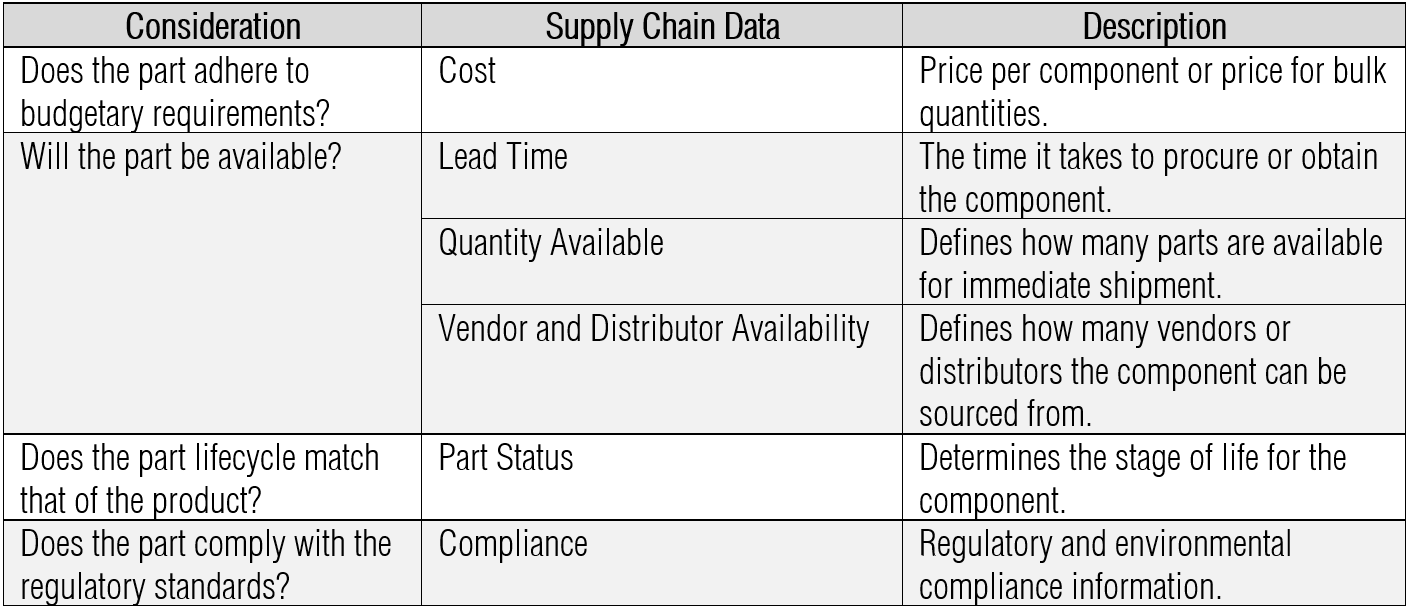
Supply Chain Metrics Required for Component Qualification
Supply chain data must be evaluated for every component in the design without exception. The PCB library should function as a centralized source of both design and sourcing intelligence.
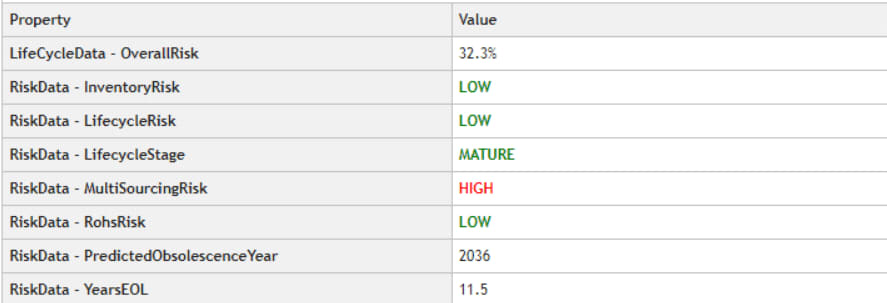
Required Risk Data to Make Informed Part Decisions
1. Inventory and Availability Data
- Stock levels across distributors
- Supplier diversity
- Lead time variability
These factors determine whether a part can support both prototyping and volume production.
2. Lifecycle and Obsolescence Data
- Active vs. obsolete classification
- Alternate component availability
- Product lifecycle alignment
Lifecycle visibility ensures long-term design viability and reduces redesign risk.
3. Cost and Procurement Data
- Pricing across quantity tiers
- Supplier pricing consistency
- Long-term sourcing trends
Cost considerations should be evaluated early to avoid late-stage BOM adjustments.
4. Compliance and Regulatory Data
- RoHS, REACH, and environmental standards
- Industry-specific certifications
Failure to validate compliance early can introduce delays during manufacturing qualification.
Using Risk Data to Drive Design Decisions
Supply chain data becomes actionable when translated into design risk. Key risk factors include:
- Inventory instability
- Long or variable lead times
- Lifecycle uncertainty
- Supplier concentration risk
These issues mirror broader design risks seen in electrical performance domains, where late-stage issues can require costly redesigns. For example, unresolved design risks, whether electrical or sourcing-related, can lead to iteration cycles and delays similar to those described in signal and power integrity challenges.
A risk-based evaluation model enables engineers to prioritize resiliency alongside performance.

Electronic Part Research and Selection Process
From Component Selection to Production Readiness
Design decisions propagate through the entire product lifecycle from schematic to layout, fabrication, and assembly. A supply chain-aware design process supports:
- Faster BOM validation and release
- Reduced redesign cycles
- Better collaboration between engineering and procurement
- Improved production scalability
This aligns directly with best practices in design for manufacturability (DFM), where early design decisions determine production efficiency and cost.
Build Supply Chain Intelligence into the Design Process
PCB design does not end at electrical validation. A design is only successful if it can be reliably sourced, built, and sustained over time.
By embedding supply chain data into the PCB library, organizations shift from reactive procurement to proactive, design-driven decision-making.
This approach reduces risk, accelerates time-to-production, and ensures that component selection supports both technical performance and real-world manufacturability. To implement this approach in practice, PCB teams require tools that integrate real-time supply chain intelligence directly into the design environment.
Enabling Supply Chain–Aware PCB Libraries with OrCAD X CIP
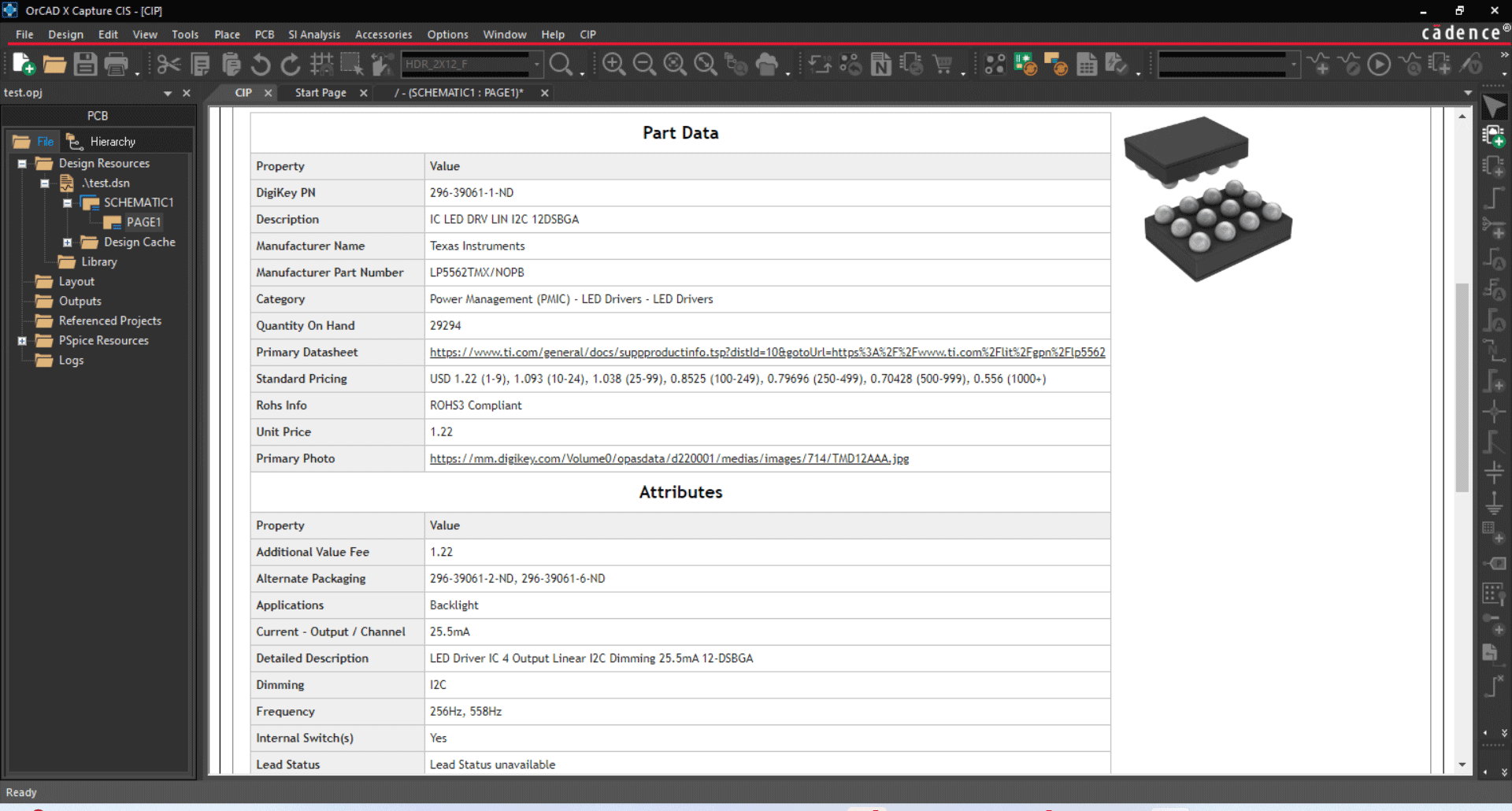
Incorporating Supply Chain Data into Your Component Library with OrCAD X CIP
Modern PCB libraries must incorporate real-time supply chain intelligence directly into the design environment. Tools such as OrCAD X Component Information Portal (CIP) enable this by integrating distributor data into your component database, eliminating manual research and ensuring parts remain current and purchasable throughout the design lifecycle. This approach aligns component selection with sourcing viability, reducing risk and improving time-to-production.
With OrCAD X CIP, engineers can evaluate both technical and sourcing criteria in a single workflow, improving decision-making during component selection and new part introduction (NPI). Key capabilities include:
Selection and Visibility
- parametric + supply chain data in CAD
- lifecycle, availability, purchasing insights
- live distributor access
Risk and Compliance
- compliance validation
- approved components only
- risk mitigation + resiliency
Automation and Lifecycle
- Zero Touch BOM
- auto updates + sync
- lifecycle longevity
This capability can be extended further with the CIP Compliance Module, which integrates real-time supply chain intelligence from SiliconExpert and provides access to data for over 300 million components.
Evaluate components with real-time supply chain data and build a sourcing-aware library with OrCAD X CIP.